

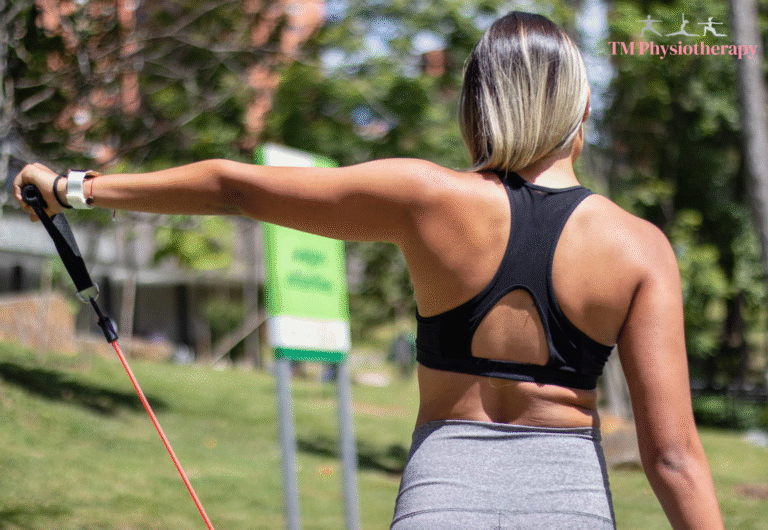
The glenohumeral (GHJ) joint, or the shoulder, has the highest range of motion in the body. It is known for sacrificing stability to gain more mobility. Shoulder instability usually occurs through traumatic events such as throwing, bench pressing, or falling. A shoulder that feels dead, loose, or slips is a sign of instability.
Instability often seems to recover quickly, but pain going away is not a clear sign of a healthy shoulder. This is why 90% of shoulder instability episodes under 20 will occur again. The rotator cuff muscles prevent your arm from slipping when you reach overhead, behind your back, or out to the side.
Tips for Keeping a Strong Healthy Shoulder Joint:
 Start with side-lying external rotations; even a can of beans is enough to build the foundation. Shaking or sharp pain is a sign to lower the weight.Hanging from any straight bar is another option for total shoulder health. It is best to work up to holding for at least 1 minute.
Progressions: From there, progress to evenly strong (assisted) pull-ups and bench pressing movements to build a strong base surrounding the shoulder.
It’s a non-negotiable that the shoulder is solid in every direction it moves; any weak points will be exposed. Uncertainty with the moving shoulder can be managed and prevented. Physiotherapy and Pilates is a great way to build strength and stability around the shoulder joint. A proper rehabilitation programme will help improve your shoulder stability and prevent pain. If you don’t take control of your symptoms, they’ll take control of you.
